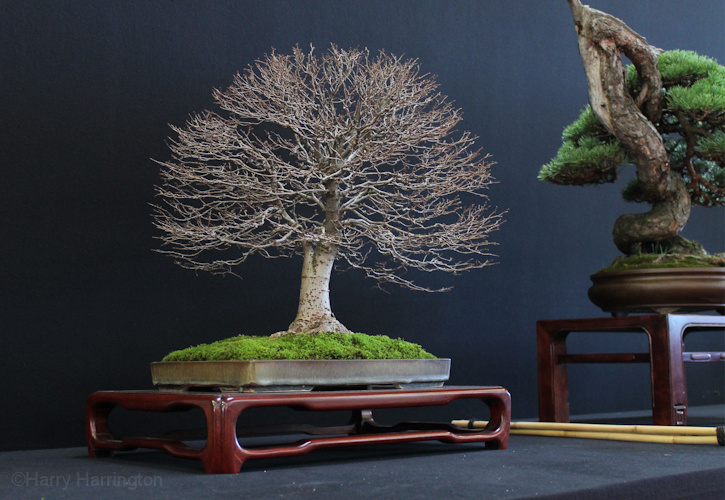
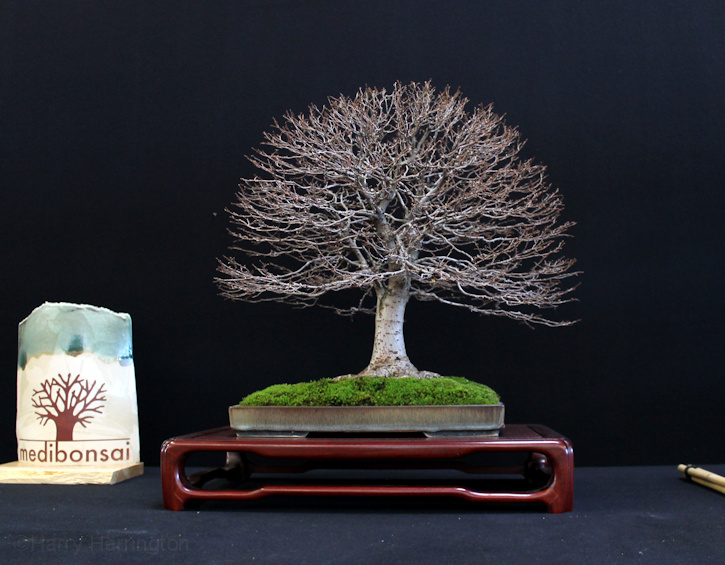
Genus of about 6 species of deciduous, semi-evergreen trees occurring in woodland, thickets and hedgerows in Italy, Greece, Turkey,Iran and Asia. Zelkova have alternate, ovate to elliptic toothed leaves. Most species display good fall colour of yellows and orange-browns.
Ulmus species and in particular Ulmus parvifolia/Chinese Elm are very often confused with Zelkova species in particular Zelkova serrata/Japanese Elm. Zelkova are classed as a seperate genus to Ulmus as they have fruits that are unwinged as opposed to the winged friuts of Ulmus. Zelkova also differ in that they have single-toothed leaves whereas Ulmus have double-toothed leaves.
(Ulmus are listed seperately under their own species guide).
The usual Zelkova species used for bonsai is the Japanese Grey-bark Elm /Zelkova serrata, however there is no reason why any of the smaller leaved Zelkova species cannot be used.
BONSAI CULTIVATION NOTES
Zelkova serrata/Japanese Elms are often sold as indoor bonsai and as such are acclimatised to indoor growing conditions, Japanese Elms sold as outdoor bonsai and all other species of Zelkova should be cultivated outdoors. Japanese Elms grown indoors (or in climates with very mild winters) will remain evergreen where as outdoor cultivation results in a deciduous tree. Ensure indoor trees do not become too cold in their first winter outside. Zelkovas should be able to cope with the adverse growing conditions indoors though they are never as vigorous as their outdoor counterparts.
POSITION:
(Indoors) Well lit, cool position on a sunny windowsill during the winter. Keep up humidity levels. Place outside from May onwards after last frosts have finished. Try to keep outside until Autumn when the leaves can be allowed to fall naturally before bringing indoors.
(outdoors) Outdoor Zelkovas/acclimatised Zelkovas are hardy to frost though temperatures below -5°C can result in fine branches dying back and root damage so should be afforded some protection. Frost protection can include placement in darkened outhouses and garages as when out of leaf Zelkovas do not require light.
WATERING:
(indoors) Never allow compost to dry out, keep the compost evenly moist. Check the compost daily but only water when necessary. Watering daily as a routine results in sodden compost, leading to lack of vigour, rootrot and eventually death.
(outdoors) As with indoor watering though during periods of strong sun, high temperatures or strong growth in the Spring, trees can need far more frequent watering.
FEEDING:
(indoors) Balanced feed weekly through Spring and Summer. Monthly through the winter. Do not feed when out of leaf.
(outdoors) Once buds open in Spring, feed weekly with high nitrogen for first month then every two weeks until late summer with balanced feed.
REPOTTING: In Spring as buds extend annually until around 10years old or more and then repot as required. Trees overwintered indoors can be repotted in Autumn when brought indoors after leafdrop. Repot in basic soil mix.
PRUNING: Allow shoots to extend 3 or 4 nodes then prune back to 1 or 2 leaves as required. Larger-leaved Zelkovas respond well to leaf cutting in Summer
WIRING: In mid-summer though indoor trees can be wired mid-winter particularly if out of leaf. Care should be taken as bark marks easily.
PROPAGATION: Sow seed outdoors in Autumn or Spring. Greenwood cuttings in Summer. Hardwood cuttings in Winter. Air-layering after spring growth has hardened.
PESTS AND DISEASES: Zelkova bonsai as with all Elm bonsai are not affected by Dutch Elm Disease as the beetle requires the volume of wood only available to it in fully grown mature trees. An attack (if it were to happen) would easily be dealt with by systemic insecticides and fungicides on a potted tree in comparison to the problems associated with eradicating Dutch Elm Disease on a fully-grown tree in the ground.
Watch for aphids, leafhoppers, leafspot and gall mites.
STYLING: Suitable for all forms and sizes- especially good for the broom form which replicates the natural shape of field-growing Zelkova.