
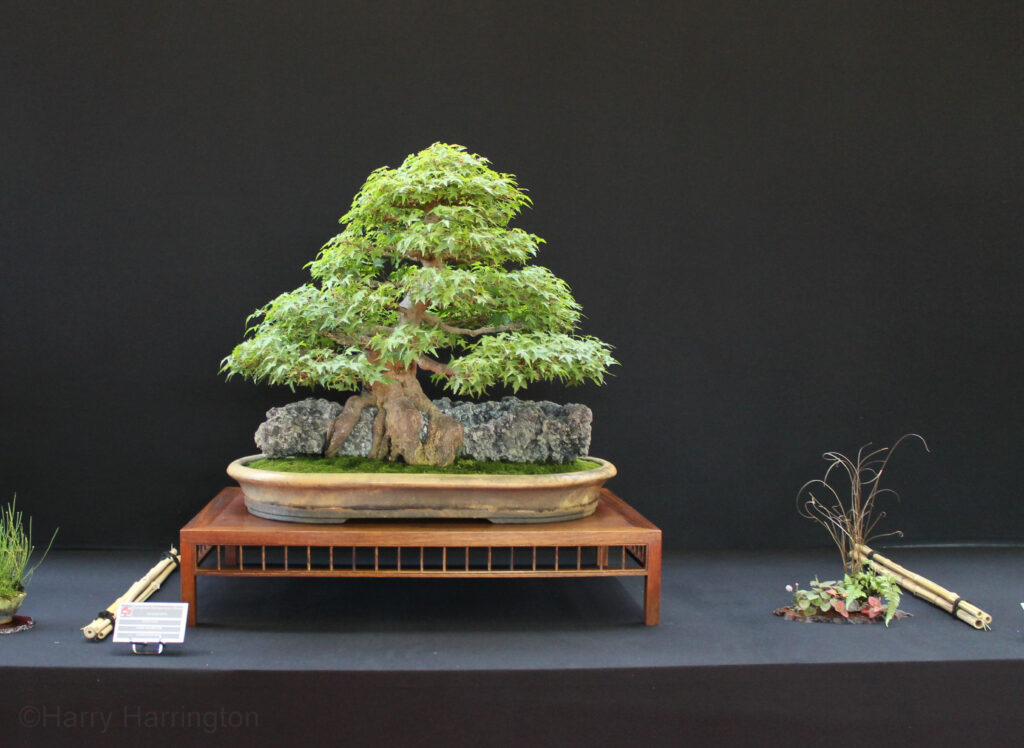
Acer palmatum are deciduous small trees and shrubs, with opposing odd-numbered (anything from 5-11) pointed leaves, native to Japan, China and Korea. There are at present hundreds of varieties in cultivation. They are very popular for use as bonsai due to their ready ability to respond to most bonsai techniques, beautiful foliage and graceful branch structure.
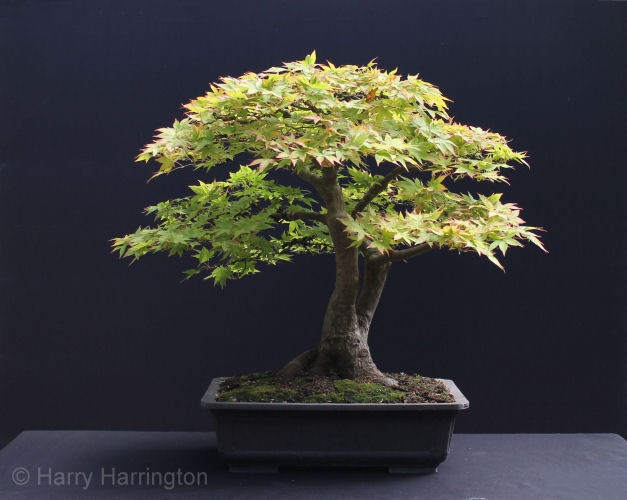
Across the range of the species there is much variation in growth habit, leaf size, leaf shape and spring, summer and autumn colour. Varieties with a green summer leaf colour tend to be more robust whilst red-leaved varieties (though arguably more beautiful) lack the same quantities of chlorophyll in their leaves and are weaker. Flowers and key-shaped fruit tend to be insignificant and easily overlooked. The main problem with looking after Acer Palmatum is keeping the very thin leaves free of blemishes as they are easily burnt by the sun and wind.
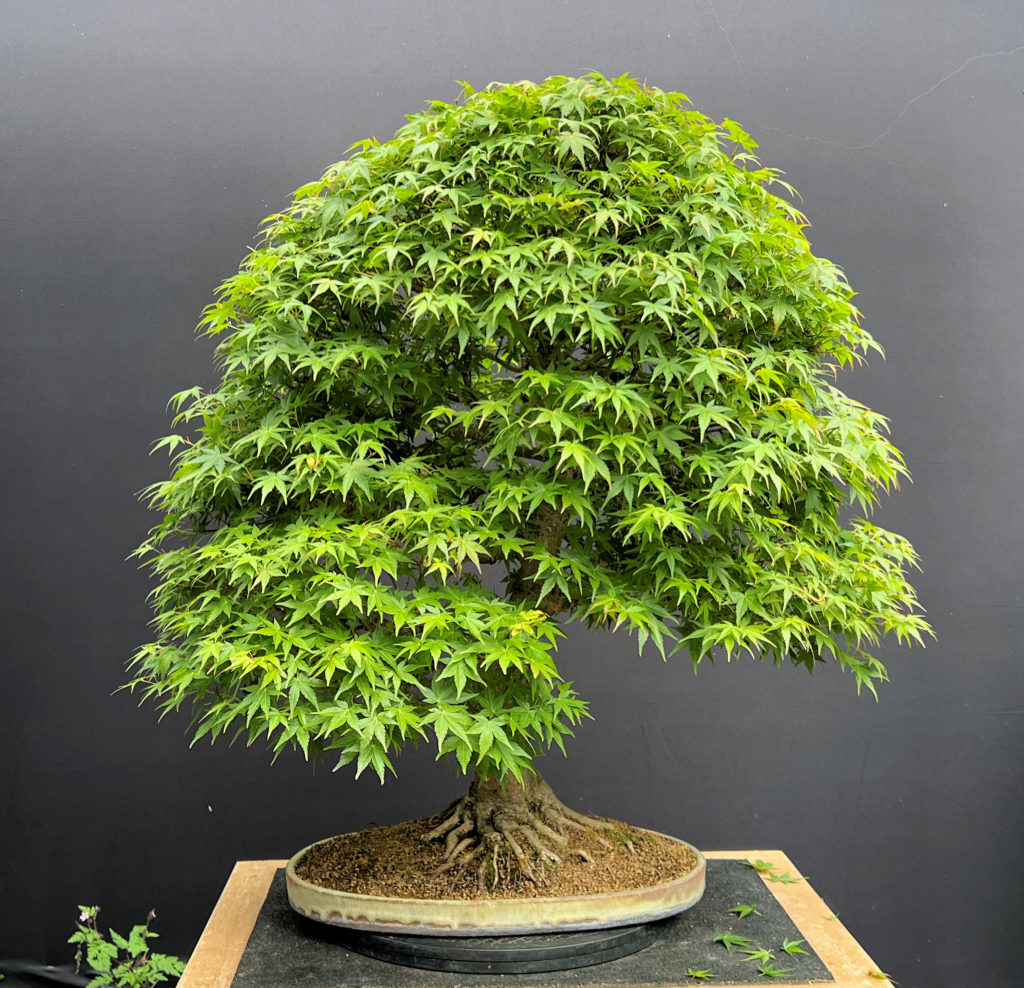
Bonsai cultivation notes
Position Out of direct sunlight and strong winds throughout the year to protect leaves against sun and wind scorch. However good light in spring and autumn aides vigour and leaf-colour, as well as leading to smaller leaves.
In winter, protect against frosts below -10°C.
Watering Acer palmatum are very thirsty prior to new flushes of growth in Spring and Summer and will need additional water at these times.
Feeding Feed weekly with high nitrogen fertiliser as soon as leafbuds open in spring to encourage strong growth and to strengthen leaves against sun and wind scorch. Withdrawing some early fertilising produces very short internodes and finer growth required on ‘finished’ or developed trees.
After hardening off, feed fortnightly with a balanced feed.
Repotting Every 2 to 5 years as buds extend in Spring. Maples that come into leaf early in the year (especially Kiyohime) can be repotted later, even when their first pair of leaves have opened. Repotting should stop when maples begin to extend new shoots.
Pruning Unless extension is required to form new areas of foliage or branches, cut new growth back to one or two pairs of leaves following bursts of growth through the growing season. For trees that require short internodes, buds can be pinched out leaving 2 new opposing leaves as soon as they are visible, this will produce fine, twiggy growth with short internodes and also promote back-budding. Remove all growth with long internodes.
Leaf-cutting can be carried out in mid-summer, this results in smaller leaves, better ramification and stronger autumn leaf colour. However, defoliation should only be carried out on healthy trees, never in the same year as repotting, never 2 years running and never on weaker red-leaved varieties.
For highly ramified Japanese Maples, ensure that enough light can get into the canopy by removing one of each pair of leaves.
Hard-pruning and formative pruning should be carried out in Autumn after leaf-fall (preferably within 1 week) or during the mid-summer semi-dormant period when wounds can heal very quickly. Never prune during Spring as all Acer species have a habit of bleeding profusely which can severely weaken the plant or even result in the loss of branches. Ensure all wounds are sealed.
For trees that are displayed for their bare winter silhouettes, summer pruning might be considered.
Wiring Wiring can be carried out at any time from early-spring to late-autumn though each period carries its own advantages and disadvantages. Optimally, wiring should be carried out on bare branches before bud extension in Spring, after leaf-cutting in mid-summer or after leaf-fall in autumn. At these points in the year the branch structure is not obscured by foliage and there is enough sap remaining in the branches to keep them supple.
Spring wiring should be carried out with care as the new buds can dislodge very easily and wire can quickly start to mark the bark after the rapid growth of spring. Trees wired after leaf-fall in autumn should be protected against heavy frosts as branches will not heal properly until the Spring growth period. During the winter, branches become exceptionally brittle and can snap without warning, only very gentle wiring should be attempted.
Propagation Sow seed as soon as ripe. Air -layers are the principal source of propagation and should be carried out as soon as spring growth hardens off in May. Cuttings strike easily but can have a high failure rate and can take 2 or 3 seasons to grow vigorously.
Pests and diseases Aphids, scale insects, caterpillars, viruses and fungal diseases such as Verticillum wilt.
Plants weakened by lack of fertilising, poor root systems, repotting, under or overwatering, lack of dormancy are more likely to suffer burnt leaves.
Styles All forms except literati in small to extra-large sizes.
Additional information Some varieties of Acer Palmatum have variations in growing area dominance. Shrubby varieties such as Kiyohime are basally dominant and unless care is taken when pruning can have very sparse apexes.
Suitability for very hot climates is questionable, in extreme summer temperatures there can be an endless struggle to keep the leaves in good condition or even intact on the tree. Acer Palmatum also require a dormant period (winter temperatures of less than 10°C for at least 44 days). Trees can survive a few seasons without a dormant period but lose their vigour and this can lead to their eventual demise.
Acer palmatum are very suitable for thread and approach grafting of new branches and new roots.
Avoid grafted nursery trees often seen for sale in UK garden centres (one Acer palmatum variety grated on top of a more vigorous understock trunk). Only purchase grafted nursery trees grafted specifically for bonsai with a very neat graft low down on the trunk.