The very top branches of a bonsai are known as the apex. In a mature field-growing tree and a bonsai the apex is seen to be a broad dome of foliage above the rest branch structure.
Whilst building and shaping the branches of a bonsai is frequently described in bonsai literature and is therefore reasonably well understood, apex building, or the formation of the apex, is rarely described and can be difficult to style.
What is the Apex?
It must be understood that the apex is a general term that describes the upper branches and silhouette or shape of the top of the tree. It is part of the branch structure of the tree and not a separate entity that just sits on top of the trunk.
A common fault in bonsai styling in past years has been that the apex has been visibly separated from the rest of the branch structure by a visible gap or band in the foliage. Fortunately, this does seem to be a thing of the past!
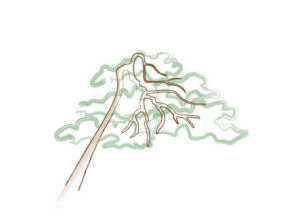
The one thing that nearly all bonsai apices have in common is a broad, dome-shaped apex. This is reminiscent of a mature tree; a narrow, pointed apex is normally illustrative of a young tree and should be avoided in bonsai.
Apex building should depend on whether the bonsai is deciduous or coniferous and the style of the bonsai; whether it is naturalistic (realistic) or abstract (styled like a Pine).
Building the apex of a classical, abstract or ‘Pine Style’ bonsai
This category contains deciduous and broadleaf trees structured in the classical or abstract style. That is, they have largely near-horizontal branches with clearly defined foliage pads.
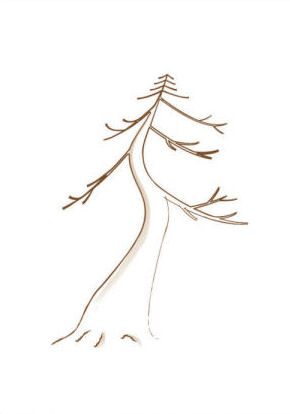
For trees in this style it is usual to build what is described by John Naka as a ‘tree upon a tree’.
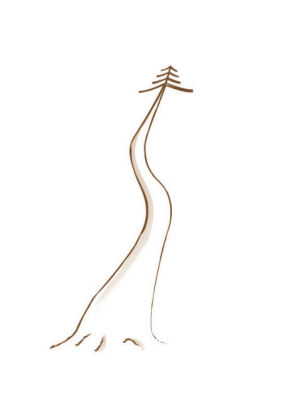
The abstract-style apex cannot be used on bonsai styled with natural, upward growing branching.
Building the apex of a naturalistic, contemporary and naturally-styled deciduous bonsai
This category contains deciduous and broadleaf trees that are naturalistic, that is, they are styled and structured to look like a natural deciduous or broadleaf trees.
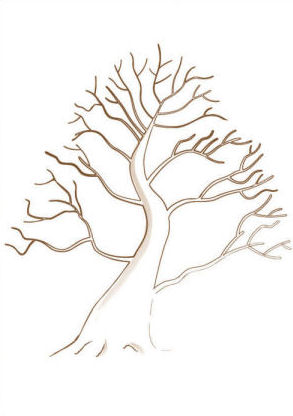
The uppermost branches grow at upward angles and fan out above the top of the trunk to create the apex and the crown of the tree.
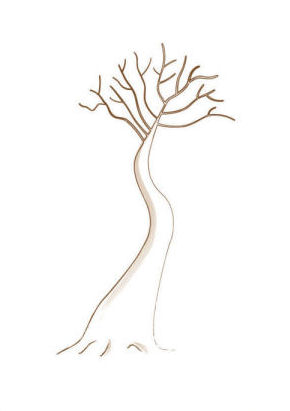
The natural apex style can be used with success on classical, abstract or ‘Pine Style’ bonsai.
Coniferous Bonsai
This category includes Pines, Junipers, Spruce and similar species that are naturally seen growing in the ‘Pine Style’ with horizontal branching and clean foliage pads.
Unlike deciduous species that are in the ‘Pine Style’, the apex should be built with less (primary) branches growing from the trunk itself. One advantage with building the coniferous apex is that the branches are never bare and the structure is never revealed.
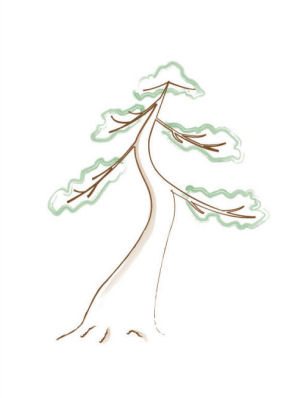
The easiest way to build a coniferous apex is using the ‘T-bar branch’.
One or two branches at the very top of the trunk are allowed to grow as a (T) bar-branch. Smaller secondary shoots and foliage is encouraged to grow along the length of the T-bar branch to create a dome of foliage.
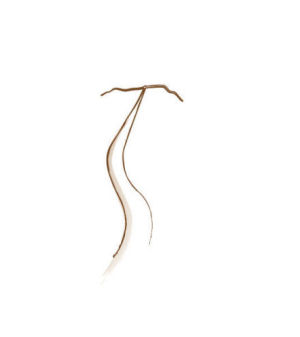
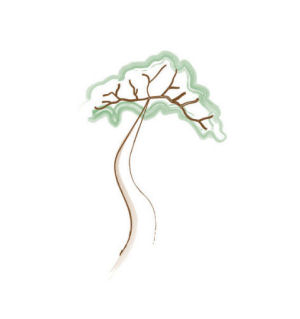
The apex of a coniferous tree should not be built from the wheel-spoke branches that are often seen growing on a pine. An apex built this way will suffer with inverse taper at the top of the trunk and will tend to have a bald patch in the middle of the apex.
A more satisfying and possibly more contemporary approach, is to use a small group of secondary branches near the top of the trunk and ‘layer’ them into a pad of foliage; each individual branch and the overall foliage pad must be kept lighter than any other branching on the tree. This method of ‘layering’ the apex of a coniferous tree is very often seen used on deadwood or heavily carved trunks and bonsai that are styled using only one or two primary branches.
The Shape and Direction of the Apex
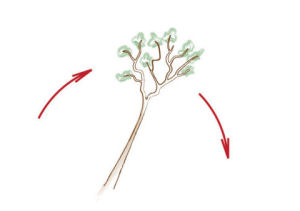
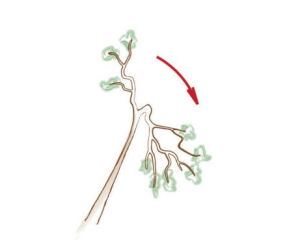
The apex should have implied direction that reflects the implied direction of the tree.
The apex has a roughly irregular triangular shape- that is, one side of the rounded apex slopes more gently than the other. The side with the steeper slope is said to indicate the direction that the tree is facing (toward the sun).
This direction is nearly always facing the same direction as the bonsai’s first branch. That is; if the first branch faces left then the apex should also face left.
All images in this article by Ninoslav Pirš