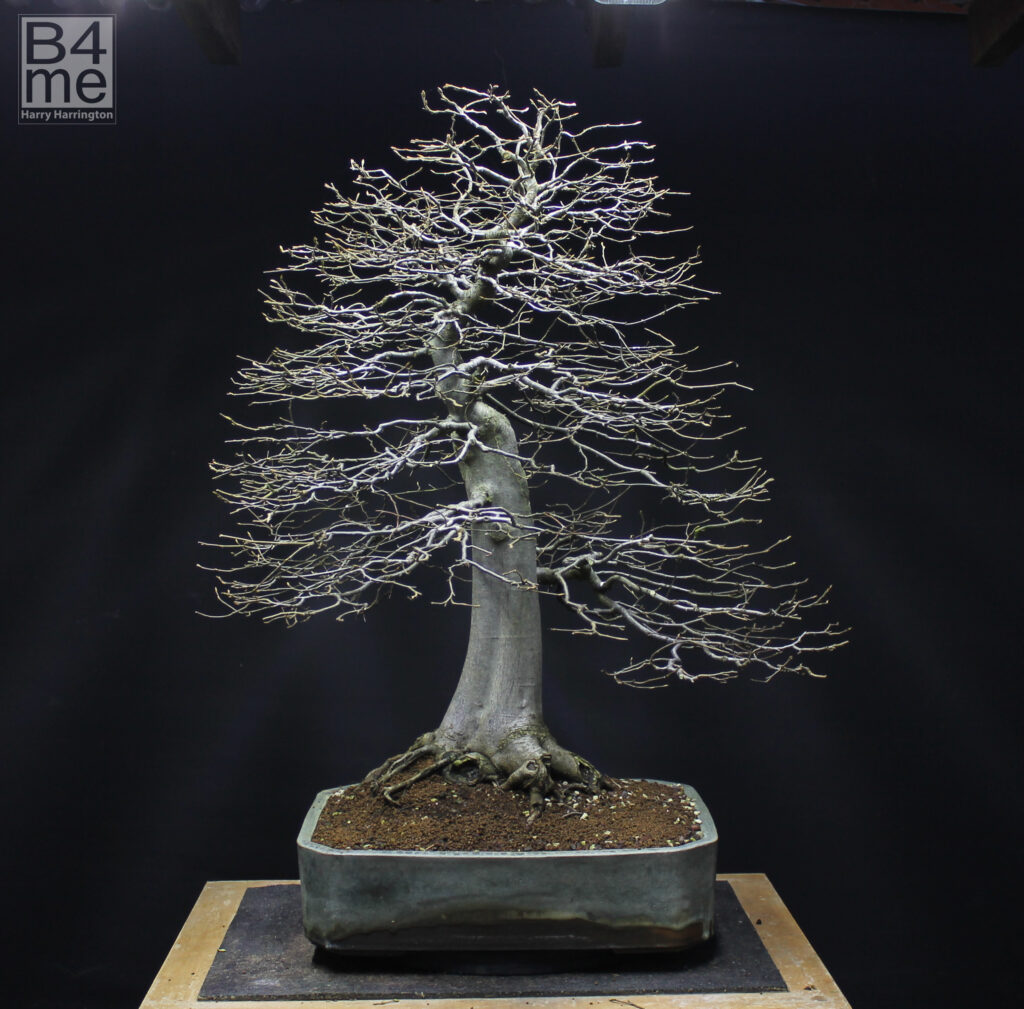
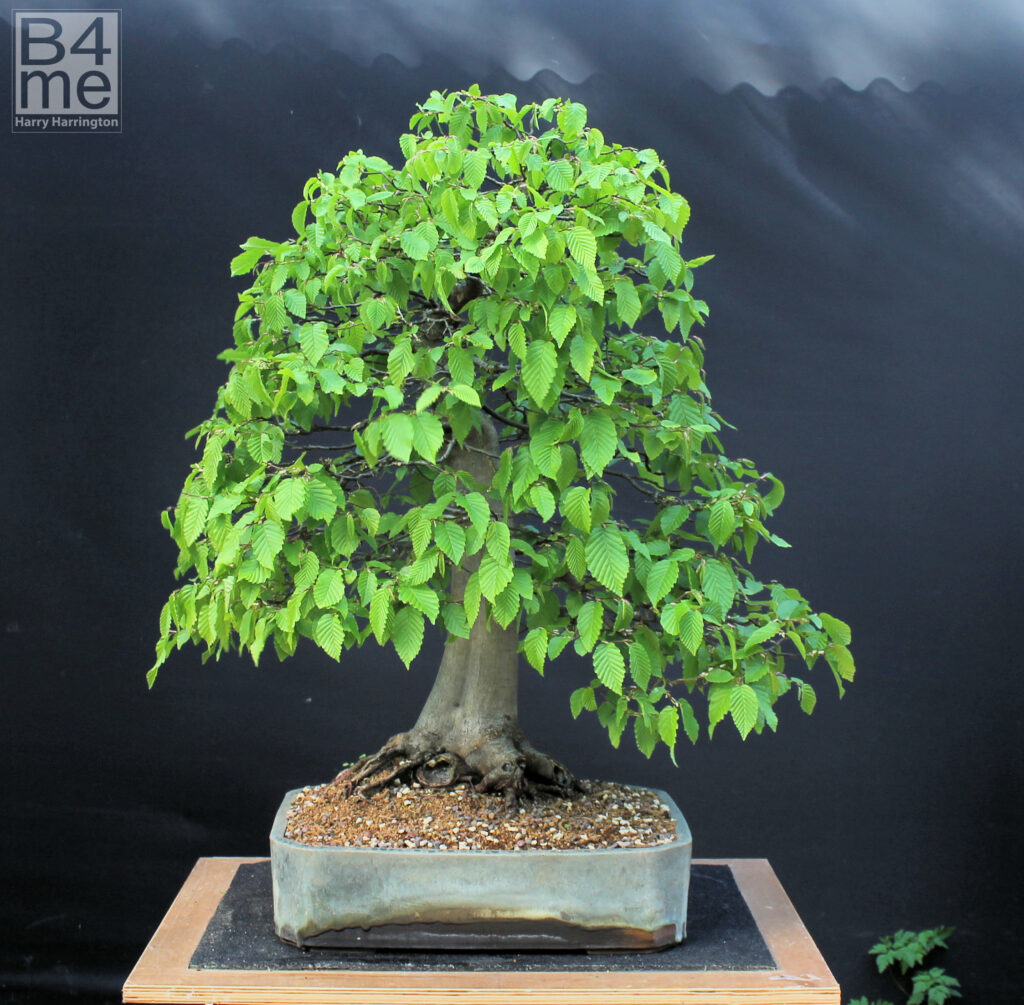
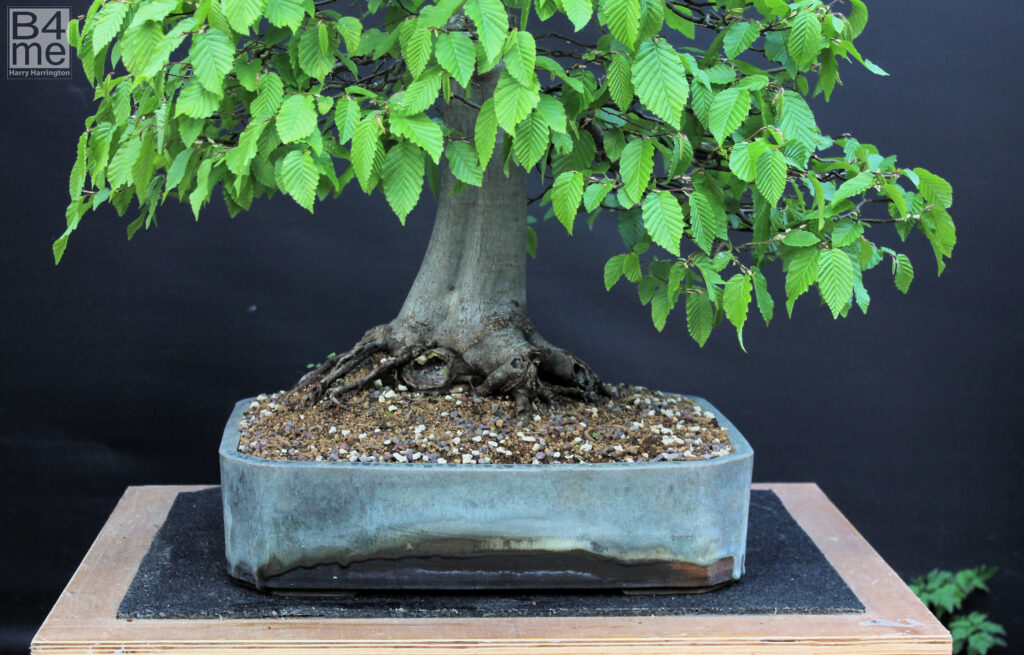
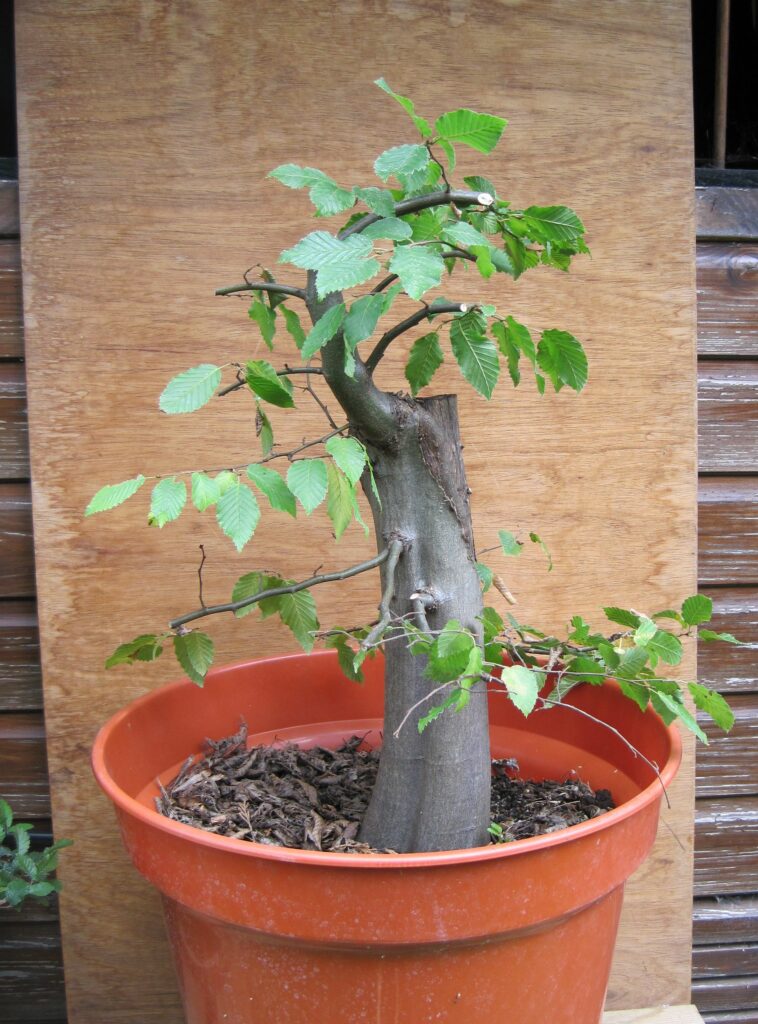
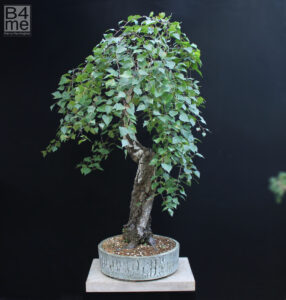
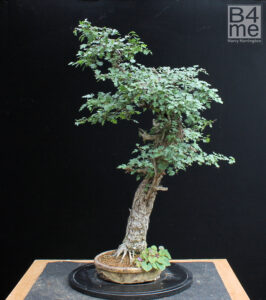
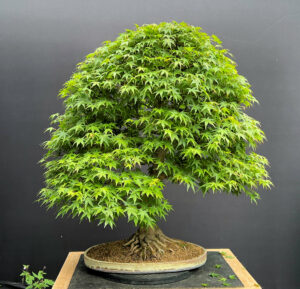
This
European Hornbeam started life as a £1 bare-root seedling
in the Winter of 2000/2001. Unfortunately, I didn't take any
specific images of this tree as it was just one of 50-60 similar
seedling/saplings bought for growing-on that Winter. However,
I have managed to find glimpses of the tree found within old
pictures of my growing bed, taken over the course of 3 years.
The
three images above show the tree being allowed to grow freely
while in the ground in (from left to right) July 2001, December
2002 and January 2003.
While
no pruning was carried out on the seedling during the early
years, a wire tourniquet (for more details see this article)
was applied to its base to ensure that when it was lifted
from the ground, it would have the at least the beginnings of
a good nebari with plenty of lateral roots around the base of
the trunk.
Why
was the seedling planted in the ground? In the Winter of 2000/2001
the trunk was pencil thick. Much too thin for use as bonsai
of any size. Before any styling or development of the branch
structure could take place, the trunk needed to be fattened
up. For this reason, along with all of the other seedlings I
bought that year, the hornbeam was planted into the ground and
literally forgotten about for a few years. Other than the very
occasional weeding around the area and some feeding with slow
release fertiliser, the tree was just allowed to grow. The more
it grew, the fatter the trunk would become. Any pruning would
just slow the speed at which the trunk thickened up and add
to the amount of time I would have to wait before the tree (and
its trunk) was ready to be developed as a bonsai.
During
the first two years, growth can be relatively slow
and with many species, as can be seen in the images above, the
trunk barely thickens. However, by the third and fourth years
of unrestrained growth, most trees will be growing very strongly
as had this Hornbeam. (For more details of field-growing for
bonsai please see this
article)

February
2005. After 4 years growth, I decided to harvest this particular
Hornbeam and start the process of developing it as a bonsai.
By this stage the tree had reached well over 2 metres in height
and had produced a 2"/5cm trunk diameter. Using the rough
guide of 6:1 (trunk height to trunk diameter) this 2" trunk
would be suitable for a bonsai with a final height of approximately
12"/30cm. For a taller bonsai, the tree would have needed
to be left in the ground for longer in order to fatten the trunkbase
further.
The
image above shows the trunkbase and the tangle of roots that
were revealed after I had dug up and bare-rooted the tree to
remove all ground-soil. The long strap-like roots are typical
of hornbeam. First impressions weren't great but once the roots
were pruned back, it was possible to tell that the wire tourniquet
had produced some strong lateral roots that all emerged at the
same height on the trunkbase; important for building a good
quality nebari on bonsai.

After
root pruning February 2005. There is a limit to how much the
roots of any tree can be worked on in one sitting, so with this
initial pruning I concentrated on removing the thickest, most
out-of-place roots while keeping as many of the thin feeder
roots intact as possible.

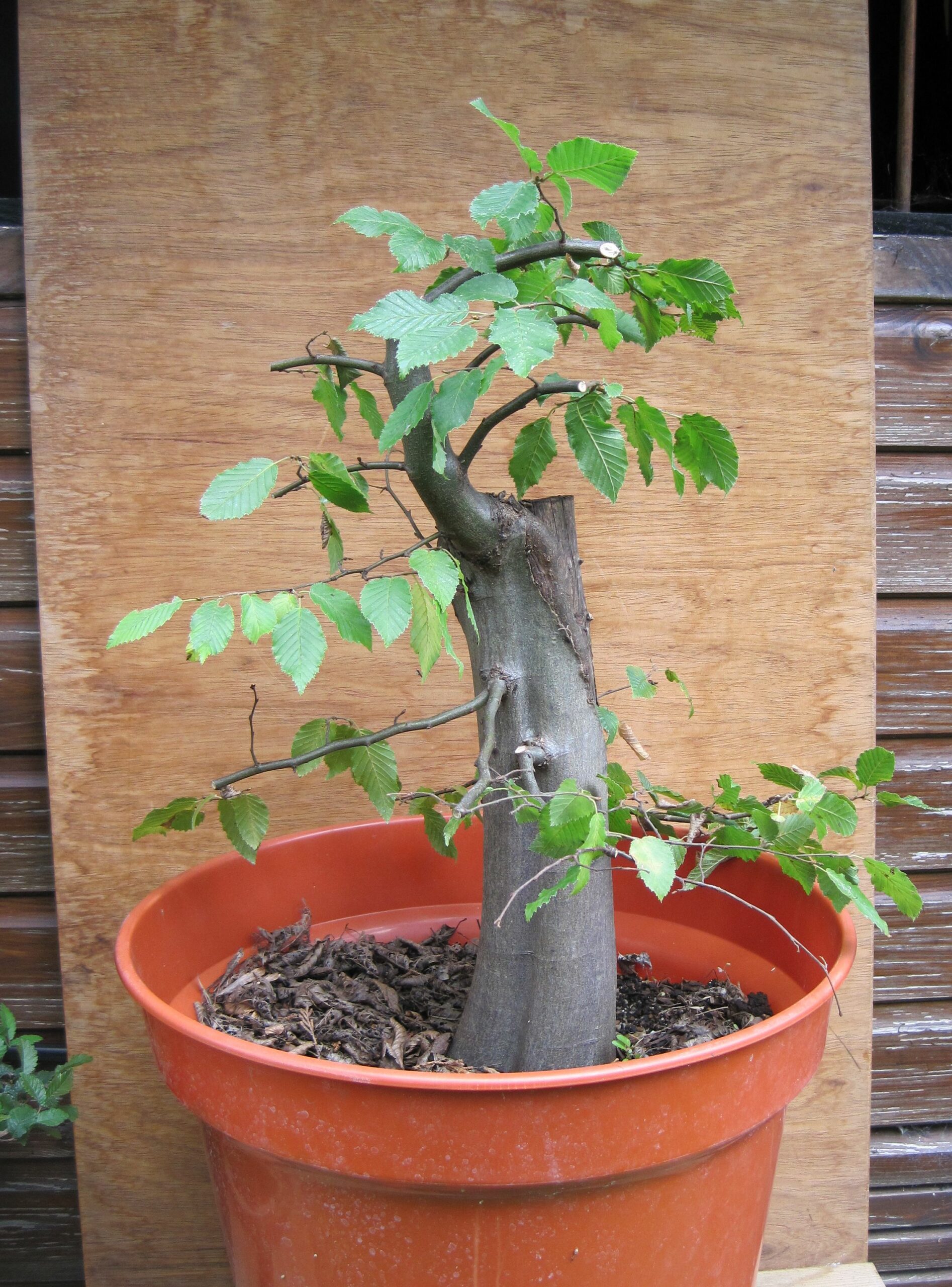
February
2005. Here is an image of the tree, showing the rough trunk-chop
I had carried out prior to digging the tree up from the ground.
The redline indicates where I envisaged chopping the trunk to
a upward growing branch, but at that time (early Spring), there
was no advantage in carrying out the work.
It
is much better to wait until the tree has had a chance to recover
and strengthen before trimming back the trunk to the redline
during midsummer. At this time, healing and callusing of the
relatively large wound will be strongest and fastest.
The
hornbeam was finally planted into a large container using just
bonsai soil and left to recover.

May
2006. 15 months later and the Hornbeam has progressed well.
The new trunk leader was allowed to thicken through 2005 to
create taper from the point where it had been chopped. Some
building of the new branch structure had also begun. Comparing
this image with the one from February 2005, it is easy to see
why chopping a trunk back to a thinner branch or shoot to increase
taper is a useful bonsai technique.

December
2006. Six months later and the tree has gone dormant and is
pruned, wired and styled (this work is often carried out in
early Spring in colder climates than the UK). The branches are
pruned back hard to thinner secondary branches to encourage
branch taper (in the same way that the trunk was pruned back
to a thinner branch to encourage trunk taper) and to prompt
plenty of new adventitious buds during the following Spring.

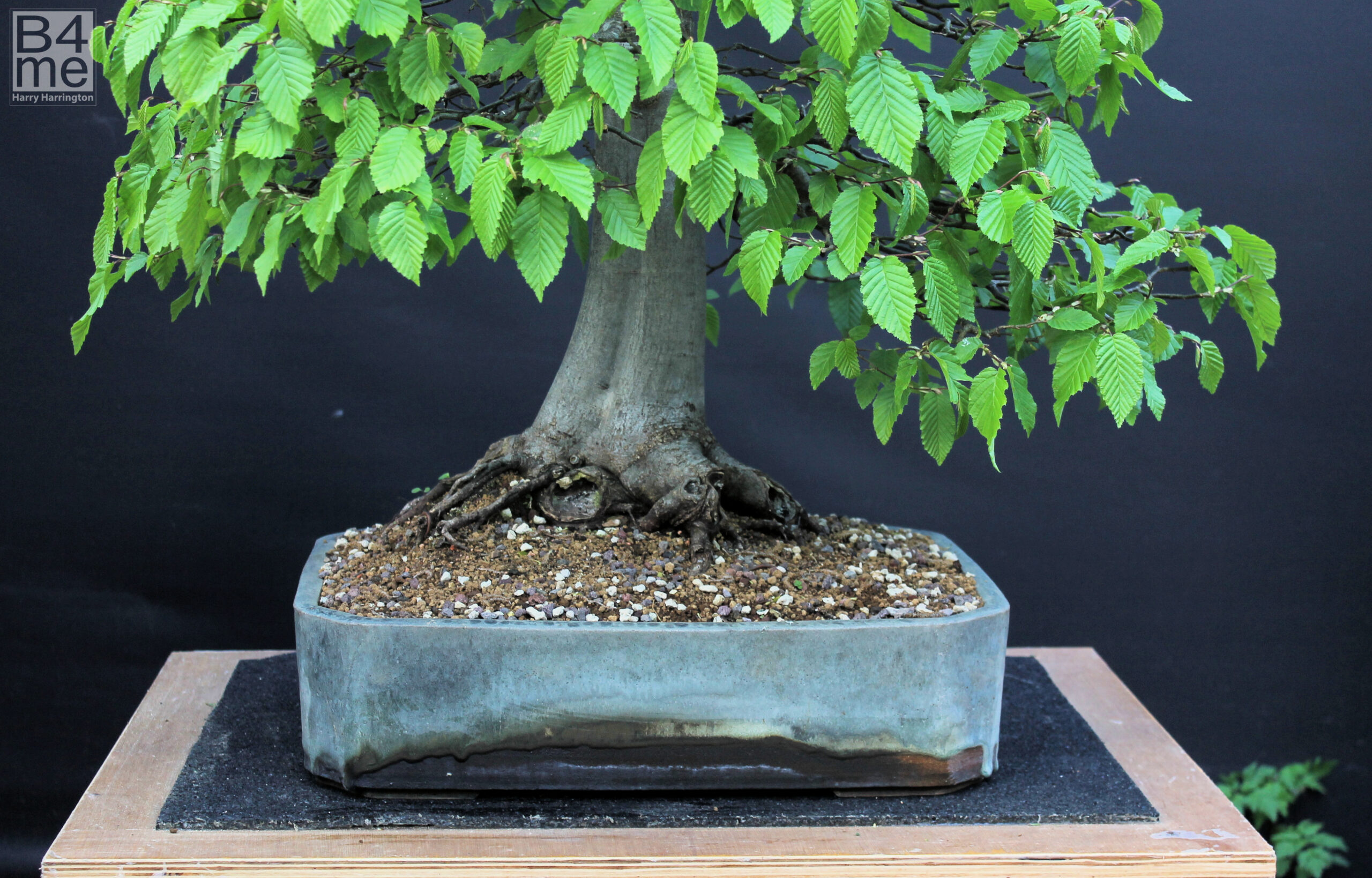
July
2007. Earlier in the Spring, the tree was finally planted into
a new bonsai pot from Erin Pottery. The trunkbase and root spread
are developing well but much of it is still covered by soil
while it continues to develop. In future years the tree will
be planted higher in the pot to show the full extent of its
surface roots and nebari.
In
the image above the tree is showing the new fresh leaves that
are produced after partial defoliation in late June. The tree
is allowed to grow strongly in the first half of the year to
help thicken up the branches and to ensure its vigour; at midsummer
it is partially defoliated and hard pruned to encourage plenty
of new, delicate growth so that the tree can be enjoyed as a
bonsai for the remainder of the growing season.

November
2007. As soon as the leaves had lost their autumnal yellow colour
and had started to fall, I pruned and rewired the branches.
With relatively mild Winter temperatures here in the UK (temperatures
very rarely drop below -7° or -8°) I find this the perfect
time for doing this work on most fully hardy deciduous species
but care should be taken in colder climates.
Note
that I have purposely kept what some enthusiasts would regard
as branches with 'faults'. Building the branch structure of
a deciduous bonsai where a single branch emerges from first
the left, then the right and then the back of the trunk (all
of the way to the apex) is a very simplistic approach to learning
to build the branches.
While
such a simplistic branch structure is easy to understand and
recreate, it also creates a cartoon-like appearance that is
not reflective of a real deciduous tree. For this bonsai I have
only removed branches that seem out of place and made full use
of the rest to fill out the tree's silhouette. Note that the
branches have also been purposely wired so that they do not
create flat plains of foliage ('foliage clouds') that one might
see on a coniferous bonsai.
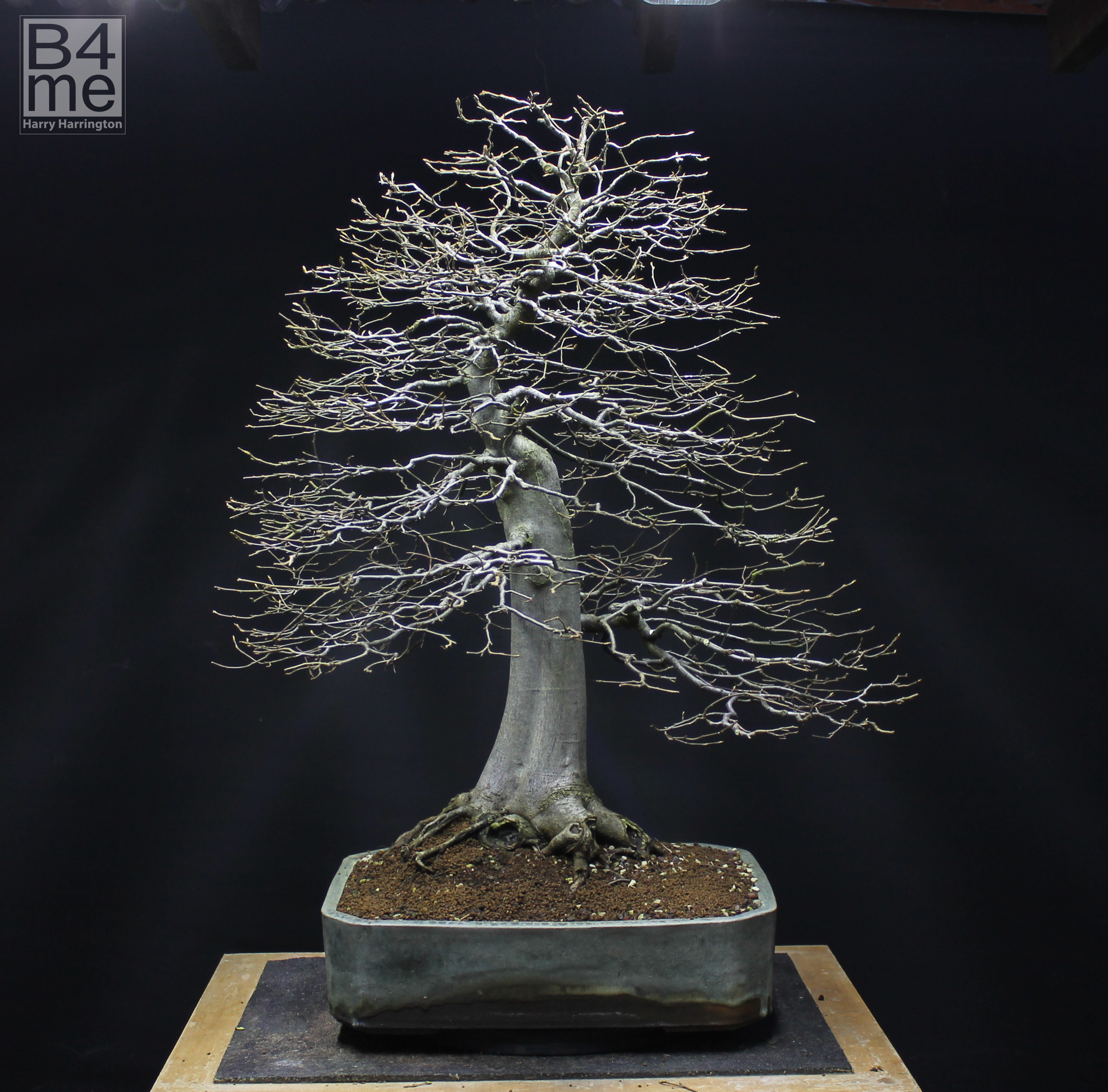
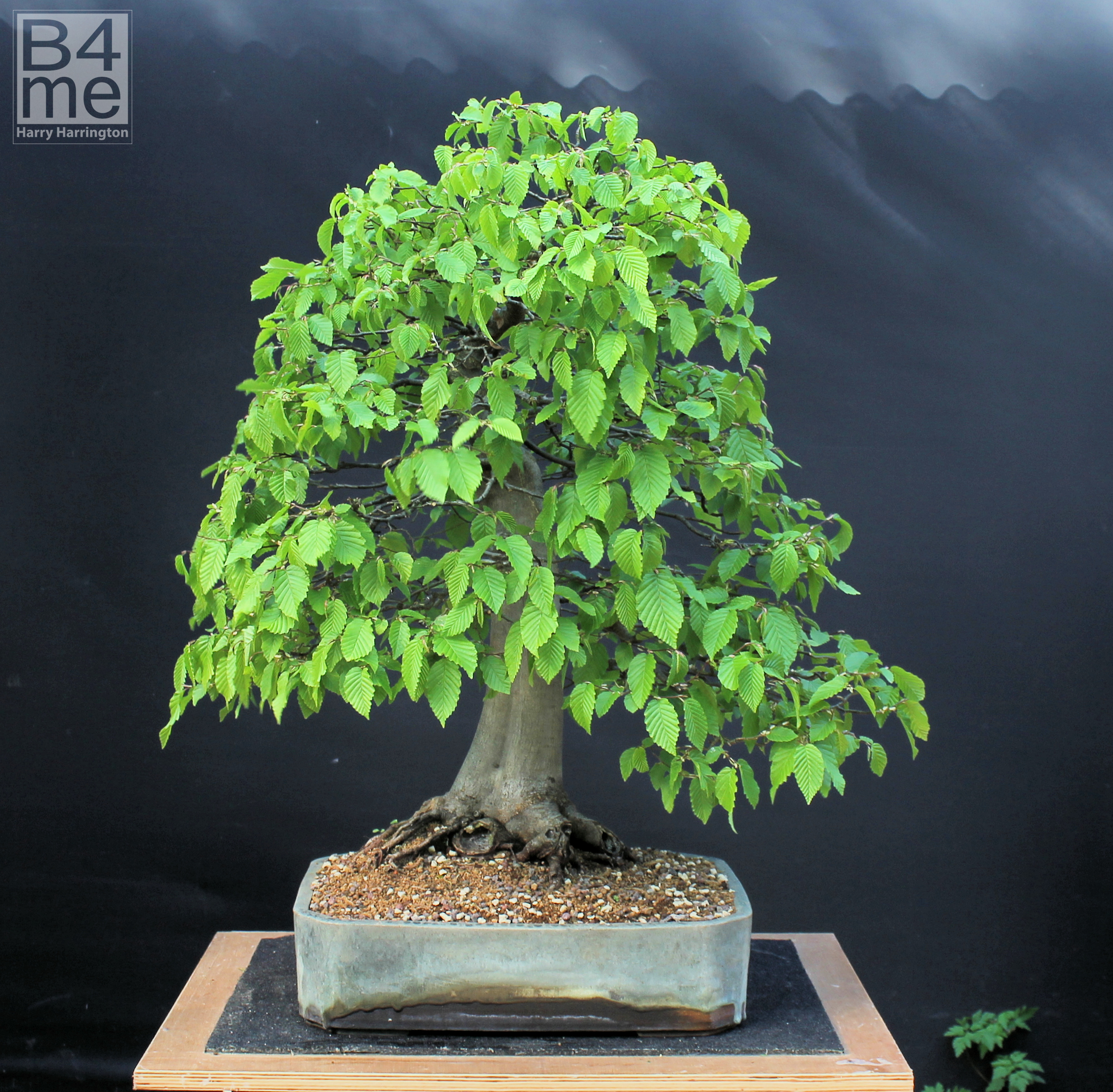
Final
height of the tree 11"/27cm. Trunk diameter above the trunkbase
2"/5cm. Current visible rootspread 5"/12cm.